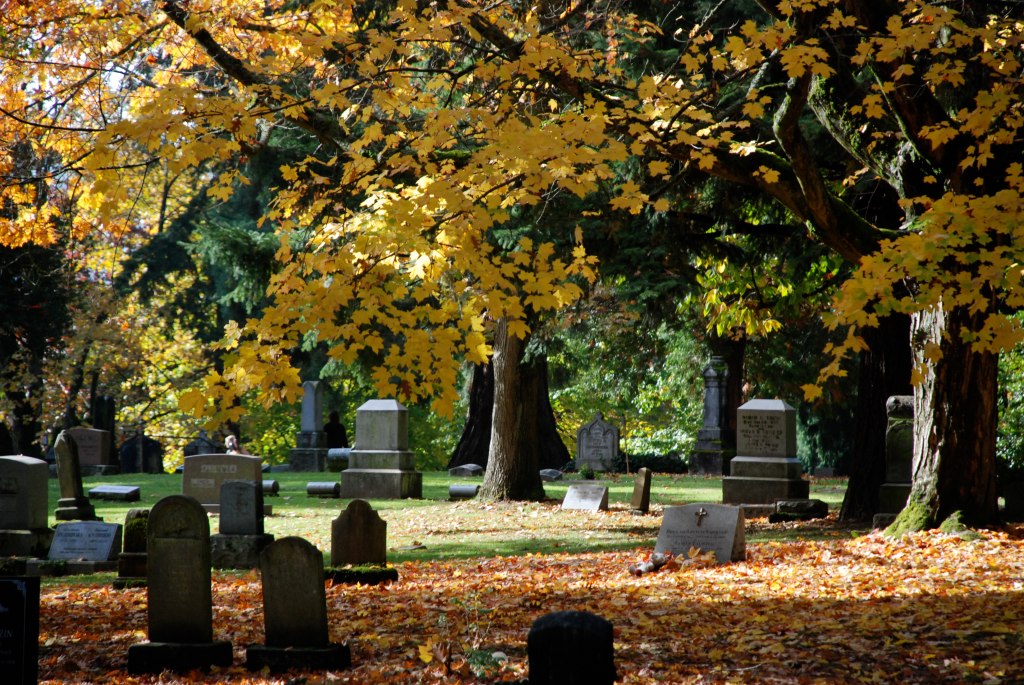
Imagine you’re out for a stroll with your family. It’s late October, and you’re walking without a destination, gleefully kicking through fallen leaves until — suddenly — you’re standing in front of a cemetery. Your children urge you inside; Halloween is right around the corner, and they’re craving something spooky. Maybe there’s a creaky iron gate, maybe a distant crow caws and the air turns cold and damp. You take your childrens’ hands and enter, only to find … a beautiful park!
“People don’t think of cemeteries as being natural spaces, but they are,” says Hannah Erickson, parks and nature content specialist for Metro, which provides regional governance for the greater metropolitan area of Portland, Oregon — including 14 historic cemeteries. “They’re just very special places. Places of sadness and memory, true, but there’s also a lot of beauty and joy there too, and when you visit, you’re connecting to the history of a place in a different way.”
Garden cemeteries, or rural cemeteries, became popular in the 19th century. Designed as an antidote to the crowded graveyards found in urban churchyards, they were picturesque, welcoming — and often private.
Metro’s historic cemeteries were built by early European settlers of the mid-1800s, who set aside acres of land to create family and community plots. “Most of these cemeteries, when they were created, were way out in the country,” Erikson says. “Urban environments have grown around them, but inside the cemetery, you can still feel that sense of hush. It’s very intimate to be in a space with peoples’ graves, and often they are lovely pools of serenity and contemplation.”
[Story appeared in Finding Nature News. Photo courtesy of Metro.]